

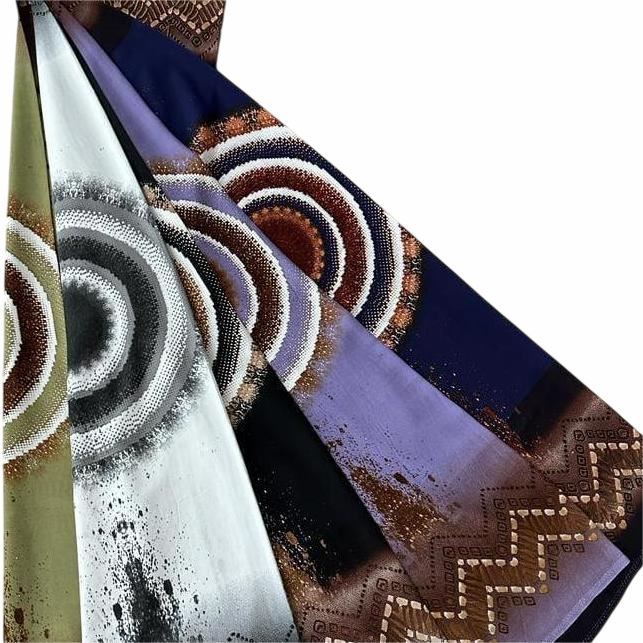
Viscose digital print has emerged as a popular technique in the textile industry, offering vibrant colors, intricate patterns, and high - resolution images on viscose fabrics. As a Viscose Digital Print supplier, I have witnessed firsthand the growing demand for this innovative printing method. However, one crucial aspect that often comes under scrutiny is its impact on the fabric's breathability. In this blog, we will delve into the science behind viscose, the digital printing process, and how they interact to affect the fabric's breathability.
Understanding Viscose Fabric
Viscose is a semi - synthetic fiber made from wood pulp, typically sourced from trees like eucalyptus, beech, or pine. It is known for its softness, drapability, and ability to absorb moisture, making it a popular choice for clothing, especially in warm climates. Viscose has a structure similar to cotton, with a porous surface that allows air to circulate through the fabric, which is essential for breathability.
The natural cellulose in viscose gives it hydrophilic properties, meaning it can absorb up to 50% more moisture than cotton. This moisture - absorbing ability helps to keep the wearer dry by wicking away sweat from the skin and releasing it into the air. However, the fabric's breathability can be influenced by various factors, including the manufacturing process, fiber density, and any additional treatments or finishes applied to the fabric.
The Viscose Digital Printing Process
Digital printing on viscose involves the use of advanced printing technology to transfer high - quality images directly onto the fabric. Unlike traditional printing methods, such as screen printing or block printing, digital printing offers greater flexibility, precision, and the ability to reproduce complex patterns with ease.
The process begins with the creation of a digital design, which is then sent to a digital printer. The printer uses specialized inks that are formulated to bond with the viscose fibers. These inks are typically water - based, which is more environmentally friendly than solvent - based inks used in some traditional printing methods.
Once the design is printed onto the fabric, it undergoes a fixation process to ensure that the inks adhere properly to the fibers. This may involve heat treatment or the application of chemicals. The final step is to wash the fabric to remove any excess inks and chemicals, leaving behind a vibrant and durable print.
Impact of Viscose Digital Print on Breathability
Positive Impact
- No Physical Barrier: One of the advantages of digital printing is that it does not create a thick layer of ink on the fabric surface. Unlike some traditional printing methods, where the ink can form a film that restricts air circulation, digital printing applies the ink in a thin, even layer. This means that the natural porosity of the viscose fabric is largely maintained, allowing air to flow through the fabric and maintain breathability.
- Enhanced Aesthetics without Compromising: Digital printing allows for the creation of beautiful, detailed patterns on viscose fabrics without the need for heavy dyes or coatings. This means that consumers can enjoy fashionable, patterned fabrics while still benefiting from the breathability of viscose. For example, Patterned Viscose Fabric with digital prints can offer both style and comfort.
Negative Impact
- Ink Penetration and Fiber Blockage: Although digital printing inks are designed to bond with the viscose fibers, there is a possibility that the inks can penetrate the pores of the fibers and block them to some extent. This can reduce the fabric's ability to absorb and release moisture, leading to a decrease in breathability.
- Finishing Treatments: Some finishing treatments applied after digital printing, such as anti - wrinkle or water - repellent treatments, can also affect the fabric's breathability. These treatments may create a barrier on the fabric surface that restricts air circulation and moisture transfer.
Factors Influencing the Impact on Breathability
- Ink Type and Quality: The type and quality of the inks used in digital printing can have a significant impact on the fabric's breathability. High - quality, water - based inks that are specifically formulated for viscose fabrics are less likely to block the fabric pores compared to low - quality or solvent - based inks.
- Print Density: The density of the print, or the amount of ink applied to the fabric, can also affect breathability. A higher print density means more ink on the fabric, which can potentially reduce air circulation. Therefore, it is important to optimize the print density to achieve the desired aesthetic effect without sacrificing breathability.
- Fabric Preparation: Proper fabric preparation before printing is crucial to ensure good ink adhesion and minimal impact on breathability. This may involve pre - treating the fabric to improve its absorbency and ink receptivity, as well as ensuring that the fabric is clean and free from any contaminants.
Measuring and Testing Breathability
To accurately assess the impact of viscose digital print on breathability, various testing methods can be used. One common method is the moisture vapor transmission rate (MVTR) test, which measures the amount of moisture that can pass through the fabric over a given period of time. A higher MVTR indicates better breathability.
Another test is the air permeability test, which measures the rate at which air can flow through the fabric. This test provides an indication of the fabric's ability to allow air circulation and ventilation.
By conducting these tests on both printed and unprinted viscose fabrics, it is possible to compare the breathability of the two and determine the extent to which the digital print has affected the fabric's performance.
Case Studies and Real - World Examples
In our experience as a Viscose Digital Print supplier, we have conducted numerous tests on different types of viscose fabrics with various digital prints. For instance, we compared the breathability of Ditsy Floral Viscose Fabric before and after digital printing. The results showed that, when using high - quality inks and optimized printing parameters, the reduction in breathability was minimal.
In some cases, we found that the printed fabric actually had slightly improved moisture - wicking properties due to the hydrophilic nature of the inks. However, when lower - quality inks were used or the print density was too high, there was a more noticeable decrease in breathability.
Balancing Aesthetics and Breathability
As a supplier, our goal is to provide customers with viscose fabrics that offer both beautiful digital prints and excellent breathability. To achieve this balance, we work closely with our customers to understand their specific requirements and preferences.
We use only the highest - quality inks and printing technology to minimize the impact on breathability. Our R & D team is constantly researching and developing new printing techniques and ink formulations to improve the performance of our printed viscose fabrics.
In addition, we offer a range of finishing options that can enhance the fabric's performance without sacrificing breathability. For example, we can apply a lightweight, breathable coating that provides some protection against stains or wrinkles while still allowing air to circulate through the fabric.
Conclusion and Call to Action
In conclusion, the impact of viscose digital print on breathability can vary depending on several factors, including the ink type, print density, and finishing treatments. While digital printing offers many advantages in terms of aesthetics and flexibility, it is important to take steps to ensure that the fabric's breathability is not compromised.
As a leading Viscose Digital Print supplier, we are committed to providing our customers with high - quality, breathable viscose fabrics with stunning digital prints. Whether you are a fashion designer, a clothing manufacturer, or a retailer, we can work with you to create custom - printed viscose fabrics that meet your specific needs.

If you are interested in learning more about our Viscose Digital Print services or would like to discuss your project, please feel free to reach out to us. We look forward to the opportunity to collaborate with you and help you bring your creative vision to life.
References
- "Textile Science: Fundamentals and Applications" by John B. Schick
- "Digital Printing on Textiles: Principles and Applications" by Rajiv Padhye
- "Viscose Fibers: Properties, Processing, and Applications" by Anandjiwala R. D. and Yuen C. W.