

Hey there! I'm a supplier of Gilded Fabric, and I'm super excited to take you on a journey through the history of this amazing textile. Gilded Fabric has a rich and fascinating past that spans centuries and continents, and I can't wait to share it with you.
Let's start way back in ancient times. Gold has always been a symbol of wealth, power, and luxury, and people have been using it to adorn themselves and their surroundings for thousands of years. In ancient Egypt, gold was used to make jewelry, amulets, and even sarcophagi. The pharaohs were buried in tombs filled with gold artifacts, and their clothing was often decorated with gold thread.
Moving forward to ancient Rome, gilded fabrics were also highly prized. The Romans used gold leaf to decorate their clothing, furniture, and even their walls. They also developed a technique called "tapestry weaving," which involved using gold thread to create intricate designs on fabric. These tapestries were often used to decorate the homes of the wealthy and were considered works of art.
During the Middle Ages, gilded fabrics continued to be popular in Europe. The Catholic Church used gold thread to decorate its vestments and altar cloths, and the nobility used it to adorn their clothing and tapestries. However, the production of gilded fabrics was very expensive and time-consuming, so they were only available to the wealthy.
In the 16th and 17th centuries, the Renaissance brought a renewed interest in art and luxury. Gilded fabrics became even more popular, and new techniques were developed to make them more affordable. One of these techniques was called "gilding," which involved applying a thin layer of gold leaf to the surface of the fabric. This technique allowed for more intricate designs and patterns to be created, and it also made the fabrics more durable.
The 18th century was a golden age for gilded fabrics. The Rococo style, which was popular at the time, featured elaborate designs and patterns that were often decorated with gold thread and embroidery. Gilded fabrics were used to decorate everything from clothing and furniture to walls and ceilings. The French court was particularly fond of gilded fabrics, and many of the most famous designers of the time, such as Jean-Étienne Liotard and François Boucher, created beautiful gilded fabrics for the royal family.
In the 19th century, the Industrial Revolution brought about significant changes in the production of gilded fabrics. New machines were developed that could produce fabrics more quickly and efficiently, and the cost of production decreased. This made gilded fabrics more accessible to the middle class, and they became a popular choice for home decor and clothing.
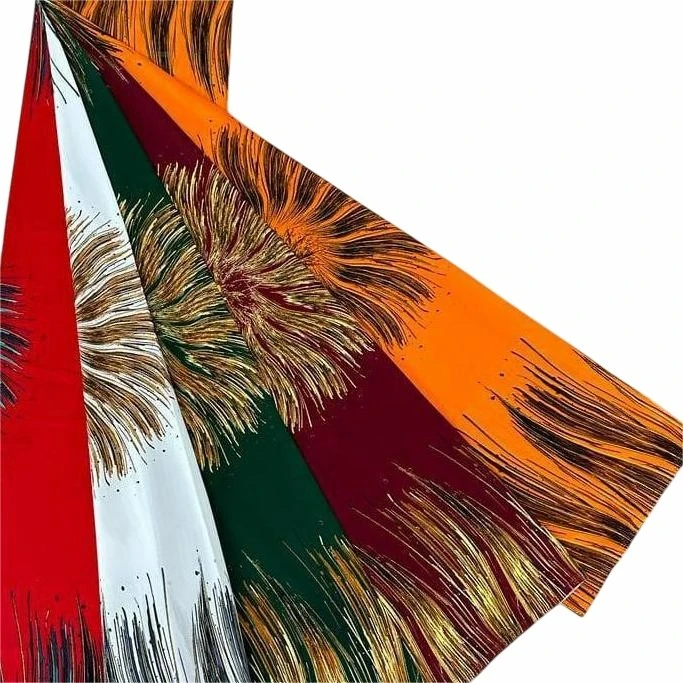
Today, gilded fabrics are still popular around the world. They are used in a variety of applications, including fashion, interior design, and art. At our company, we are proud to offer a wide range of high-quality gilded fabrics that are perfect for any project. Whether you're looking for a luxurious fabric for your home or a unique fabric for your next fashion design, we have something for you.
If you're interested in learning more about our Gilded Fabric, or if you have any questions about our products, please don't hesitate to contact us. We'd love to hear from you and help you find the perfect fabric for your needs. You can check out our Gilded Fabric on our website. Also, we have other great options like Ditsy Print Viscose Fabric and Colorful Printed Viscose.
So, what are you waiting for? Let's start a conversation and see how we can work together to bring your creative ideas to life!

References
- "A History of Textiles" by David Jenkins
- "The Fabric of Civilization: How Textiles Made the World" by Virginia Postrel
- "Textile History: An Introduction" by Richard L. Pfaff